
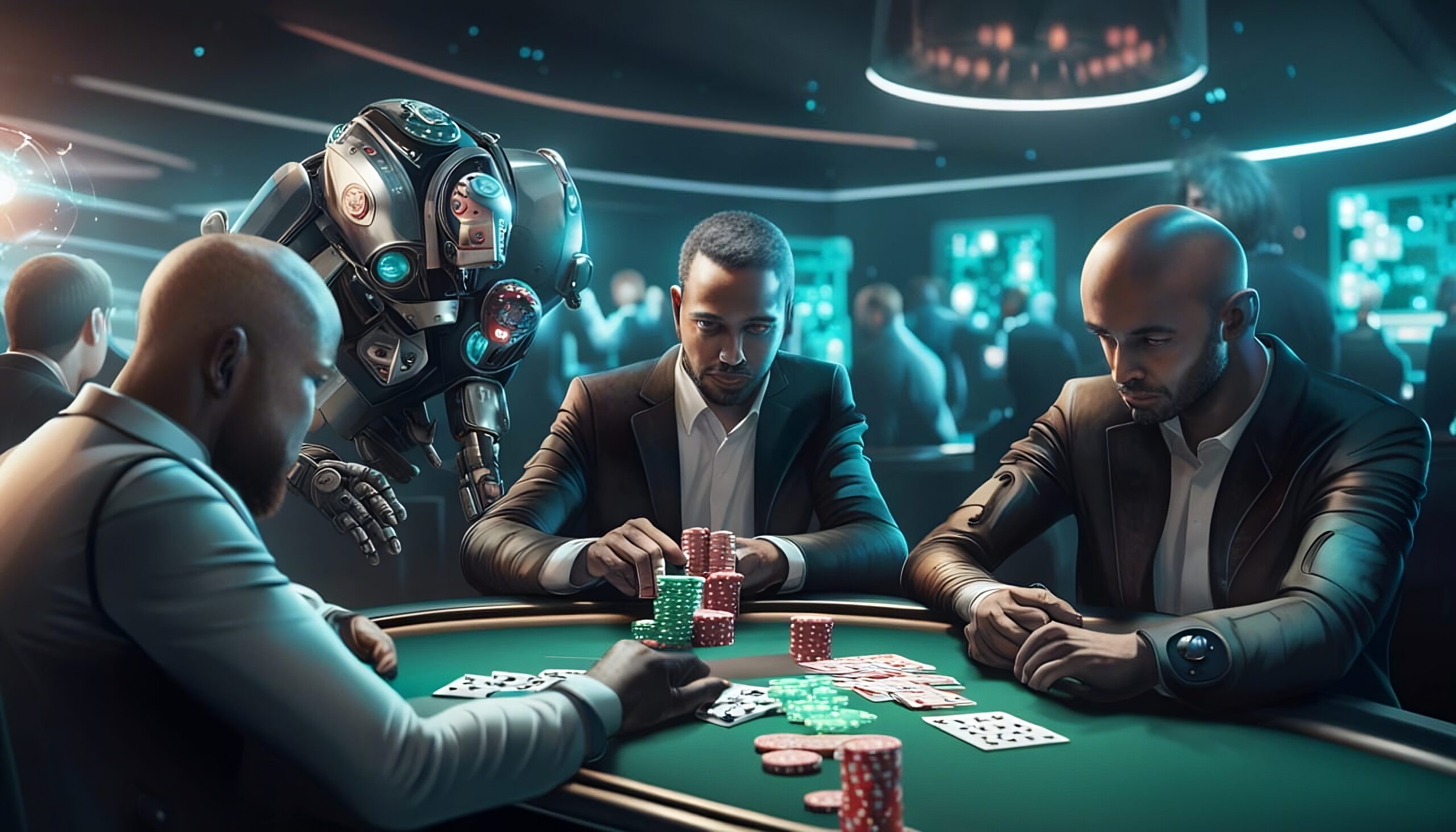
From Blocks to Bluffs: Using Minecraft to Train AI for Real-World Online Poker
Artificial intelligence is not just influencing gaming—it’s transforming it. A recent Google Cloud survey conducted with The Harris Poll found that 87% of video game developers are already incorporating AI agents into their workflows to streamline repetitive tasks and free up creative energy.
This widespread adoption spans localization, code generation, playtesting, and even narrative design.
So, if AI is already integral to game development, why not push it further—into the realm of human psychology, bluffing, and emotional strategy? Online poker, with its blend of math and human behavior, presents the perfect test bed.
That’s where Minecraft enters the picture: a vibrant sandbox where AI could learn empathy, deception, and adaptability—skills that traditional datasets alone can’t teach.
Why AI in Online Poker Needs More Than Math?
Poker thrives at the intersection of probability and psychology. On one side, it’s formulaic—calculating odds, bet sizing, and strategic EV calculations. On the other hand, it’s human: reading bluffs, controlling table image, sensing tension.
AI poker systems have already conquered the math, outperforming human pros in complex formats.
Bots, developed by Carnegie Mellon University and Meta, have even beaten elite poker professionals—including World Series of Poker champions—in six-player no-limit Texas Hold’em by deploying unconventional plays like frequent “donk betting” to avoid predictability.
But while these systems dominate in calculation-heavy play, they’re not yet masters of social nuance. That’s where immersive, unpredictable environments like Minecraft come into play.
How AI is Already Being Used in Online Poker Today?
Here’s how AI is currently reshaping the online poker ecosystem:
- Game Integrity & Security – Platforms like PokerStars and partypoker use AI to detect collusion and bots by analyzing betting anomalies.
- Real-Time Assistance – AI “poker solvers” offer analysis tools players use between sessions, though often banned during live play.
- Dynamic Difficulty Adjustment—A notable illustration of this in action is the online poker site Americas Cardroom, which has pioneered its Poker Races format. This format allows players to be represented by five AI “racers” during early tournament stages. If the AI racers reach the money, the human player takes over. This speeds up gameplay, bridges the skill gap, and keeps the game engaging for recreational players.
- Fraud Prevention – AI flags suspicious accounts or patterns, reducing multi-accounting or chip dumping.
- Enhanced Player Insights – AI tools offer post-game insights. One standout example is the poker bot, Pluribus, which achieved “superhuman performance” by blending randomness with deep strategic planning, showing that AI can excel in imperfect-information environments.
These systems excel at detection and analysis—but they don’t train AI for emotional intuition. That’s the value of a dynamic, socially rich simulator.
Minecraft as a Social Simulation Lab
Minecraft offers everything that static card simulators don’t: alliances, betrayal, negotiation, and hidden agendas—all under open-ended, emergent conditions.
- Incomplete Information – Just like poker, player intentions remain private.
- Bluffing & Deception – Alliances can mask agendas, much like poker slow-playing.
- Adaptive Strategy – Every world requires new tactics, mirroring seat-switching dynamics in online poker.
- Multi-Layered Goals – Resource gathering, survival, and diplomacy get interwoven—just like managing chip stacks and table image.
The real kicker? Oasis AI Minecraft creates entire Minecraft-like worlds in real time—no traditional game engine—using a Transformer-based model trained on millions of hours of gameplay.
The environments morph based on player input: blocks change, structures transform, and lighting shifts dynamically. Accessible via a browser, Oasis delivers a surreal, unpredictable, and deeply emergent experience.
For poker AI training, such unpredictability is gold:
- Unpredictable Interaction – AI learns to adapt in chaotic settings, mirroring poker’s unpredictability.
- Emergent Behavior – Constant change forces quick adaptation, just as poker players must adjust to unorthodox strategies.
- Fluid Social Dynamics – Alliances and rivalries shift constantly, training AI to navigate evolving player intentions—much like reading changing table images.
By leveraging AI-generated worlds like Oasis, poker-focused AI could develop social adaptability alongside strategic thinking.
Building Poker Into the Minecraft World
Here’s how developers could integrate poker directly into Minecraft-like simulations:
- AI-Powered Minecraft Poker Rooms – In-game casinos with AI dealers hosting tournaments, allowing real-time conversational play.
- Bluff Detection Challenges – Mods where AI must detect deception based on player actions and chat cues.
- Tournament Simulations – Blending poker rounds with open-world resource strategy and alliances.
- Cross-Platform Play-to-Earn Systems – Reward systems linking Minecraft and online poker platforms, enabling continuous AI learning from real players.
The AI Learning Pipeline
- Baseline Poker Knowledge – Train AI on traditional hand histories.
- Minecraft Integration – Move AI into human-populated, poker-enriched Minecraft servers.
- Behavioral Mapping – Use NLP to interpret chat, movement, and trade for deception patterns.
- Real-World Application – Apply learned behavioral models to online poker platforms for improved bluff detection and anti-cheat systems.
Benefits for Online Poker Platforms
- Smarter Anti-Cheat Systems – AI trained socially can flag collusion sooner.
- Gamified Player Training – Players learn social strategies in immersive, gamified settings.
- New Engagement Channels – Cross-promotions draw younger, Minecraft-savvy audiences.
- Metaverse Expansion – Poker evolves into experiential entertainment within virtual worlds.
Challenges and Ethical Considerations
- Data Privacy – Any behavioral tracking must meet privacy regulations.
- Ethical Use Cases – AI trained in deception requires careful oversight.
- Intellectual Property – Mojang/Microsoft may oppose gambling integrations.
- Player Safety – Ensuring age-appropriate, transparent systems is critical.
The Road Ahead
While speculative, blending AI, Minecraft, and online poker could be the leap toward emotionally intelligent AI—capable of mastering not just the cards, but the players.
Imagine a future where online poker rooms sponsor AI-driven Minecraft worlds, where bluffing, alliances, and strategy unfold among castles and mines as much as at digital tables.
That’s when “From Blocks to Bluffs” will move from concept to the next big chapter in AI-powered online poker.
For more on AI and Minecraft innovations, please click here.