
Cross-Platform Gaming Adoption Rates (2025)
Cross-platform gaming has revolutionized the gaming industry, transforming from a niche feature into a fundamental expectation. The gaming landscape in 2025 showcases unprecedented connectivity, with players seamlessly moving between mobile devices, consoles, and PCs while maintaining their progress and social connections.
Cross-Platform Gaming Adoption Rates by Device Type
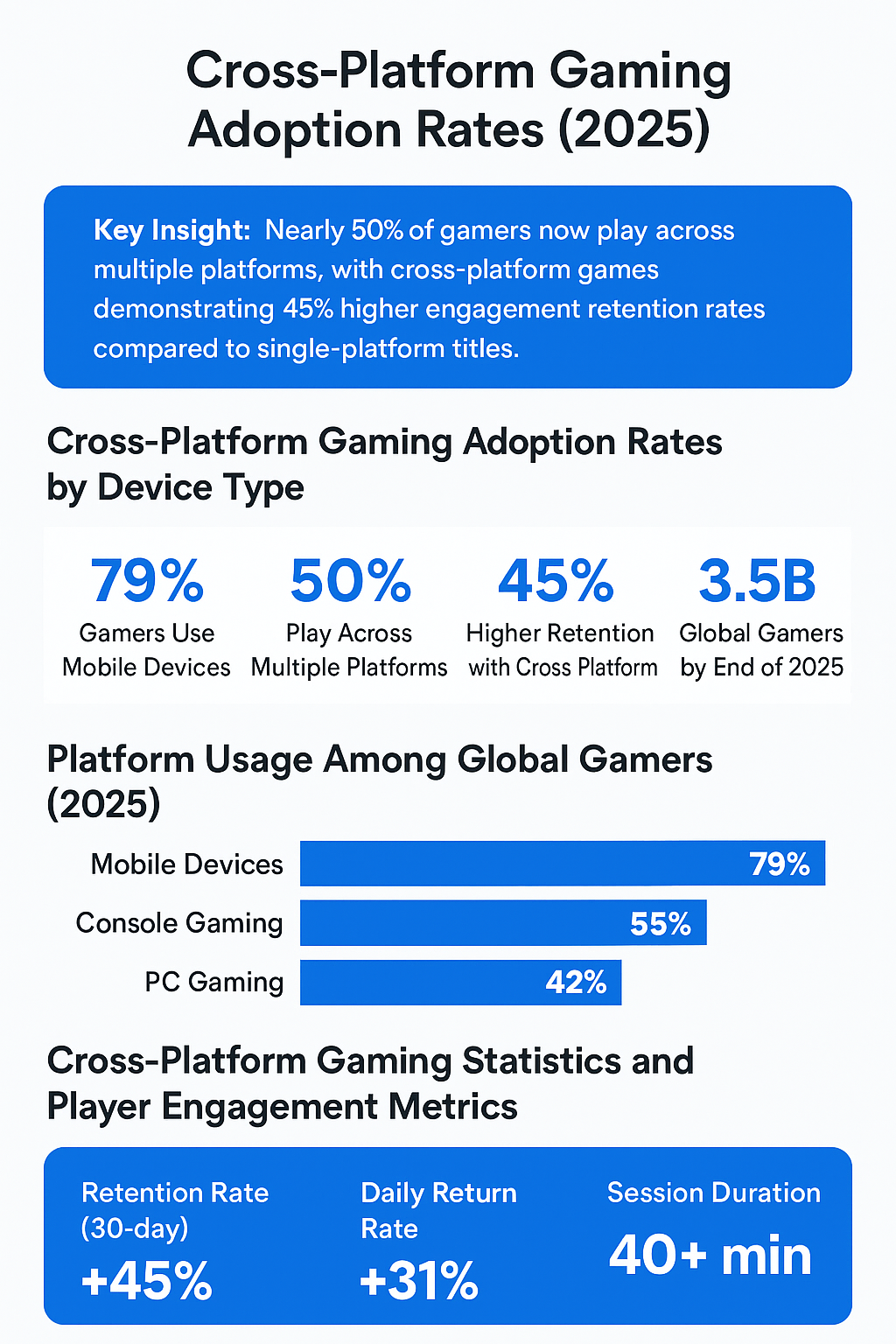
The modern gaming ecosystem demonstrates remarkable interconnectedness across different platforms. Mobile gaming serves as the central convergence point for cross-platform experiences, with significant overlap extending to both PC and console gaming platforms.
Among mobile gamers specifically, the cross-platform behavior is even more pronounced. Data reveals that 55% of mobile gamers also engage with console gaming, while 42% extend their gaming activities to PC platforms. This overlap indicates that multiplayer gaming preferences increasingly favor cross-device compatibility over platform exclusivity.
Multi-Device Gaming Patterns
The emergence of tri-platform players represents a significant shift in gaming behavior. These users, comprising 15% of the total gaming population, regularly switch between console, PC, and mobile devices. This demographic tends to be predominantly male (61%) with 46% aged between 10-25 years, demonstrating higher engagement levels and increased spending compared to single-platform users.
Cross-Platform Gaming Statistics and Player Engagement Metrics
Cross-platform gaming functionality has proven to be a critical factor in player retention and engagement. Games offering cross-progression and cloud saves demonstrate measurably superior performance metrics compared to their single-platform counterparts.
The retention benefits of cross-platform gaming are particularly evident among younger demographics. Generation Z players, who represent the largest cohort of gamers, show 31% higher return rates when engaging with cross-platform titles. This demographic increasingly expects seamless gaming experiences that adapt to their multi-device lifestyles.
Gaming Time and Platform Preferences
The average gamer spends 8.6 hours per week playing games in 2025, representing an increase from 8.2 hours in 2024. Millennials and Generation Z gamers demonstrate the highest engagement levels, averaging 10.3 hours per week, particularly in multiplayer and cross-platform titles. This increased engagement correlates directly with the availability of Steam concurrent player records and the growth of PC gaming platforms.
Mobile Gaming Cross-Platform Statistics
Mobile gaming continues to dominate the cross-platform gaming landscape, commanding over half of global gaming revenue with estimates between $120-130 billion in 2025. The mobile-first approach has fundamentally changed how developers design and monetize their games, with successful titles like Fortnite and PUBG Mobile demonstrating the potential of mobile-centric cross-platform design.
The success of mobile gaming as a cross-platform hub is evident in session durations, with cross-device players maintaining sessions above 40 minutes. This engagement level justifies the additional development investment required for cross-platform support and demonstrates the value proposition for both players and developers.
Regional Cross-Platform Gaming Trends
Regional differences in cross-platform gaming adoption reflect varying infrastructure capabilities and gaming preferences. In the United States, 70% of players game on smartphones, with approximately 50% playing on consoles and 40% on PC, demonstrating widespread multi-device usage. This trend aligns with broader gaming hardware upgrade frequency patterns in developed markets.
Generation Z and Cross-Platform Gaming Preferences
Generation Z has emerged as the driving force behind cross-platform gaming adoption. This demographic, comprising 86% who identify as “mobile gamers first,” demonstrates distinct preferences that shape industry development priorities.
Generation Z gaming behaviors indicate a fundamental shift in platform expectations. Unlike previous generations who might remain loyal to specific platforms, Generation Z players expect seamless transitions between mobile, PC, and console gaming experiences. This expectation drives the Epic Games Store vs Steam market share competition as platforms compete for cross-platform compatibility.
Cross-Platform Gaming and Esports Growth
The correlation between cross-platform gaming and esports growth is particularly evident in mobile esports, which has surged 340% since 2022. Meanwhile, console esports viewership has declined by 10-12%, indicating a shift toward more accessible, mobile-friendly competitive gaming formats. This trend impacts global esports revenue projections and platform development strategies.
Cross-Platform Gaming Technology and Development Trends
The technical infrastructure supporting cross-platform gaming has evolved significantly, with approximately 95% of studios with 50+ employees now prioritizing cross-platform development. This industry-wide adoption reflects both technological advancement and market demands for unified gaming experiences.
Cross-platform adoption grew 50%, moving from niche capability to mainstream expectation
Almost all major multiplayer games offer cross-platform play as standard feature
95% of major studios prioritize cross-platform development in new projects
Cloud gaming platforms demonstrate the highest level of cross-platform support with near-universal compatibility across devices. Console gaming follows with 92% support, PC gaming with 85% support, and mobile gaming with 78% support for cross-platform features. These capabilities enable seamless gaming experiences that adapt to player preferences and lifestyle needs.
Cross-Platform Gaming Market Value and Projections
The subscription-based gaming market, which heavily emphasizes cross-platform access, reached $10.1 billion in 2023 and is projected to reach $21.3 billion by 2030, representing a compound annual growth rate of 11.3%. Services like Xbox Game Pass, which reached 34 million subscribers by early 2024, demonstrate the market value of cross-platform gaming accessibility.
Cross-Platform Gaming Challenges and Future Outlook
Despite widespread adoption, cross-platform gaming faces ongoing challenges including latency optimization, security concerns, and ensuring fair gameplay across different input methods. Edge computing and improved infrastructure are key to addressing these limitations, particularly for cloud gaming services.
The future of gaming lies in seamless, device-agnostic experiences that prioritize player convenience and engagement over platform exclusivity. This transformation represents one of the most significant shifts in gaming industry history, with implications extending beyond technology into business models, community building, and the fundamental nature of interactive entertainment.
Cross-Platform Gaming and Content Creation
The relationship between cross-platform gaming and content creation platforms like Twitch statistics demonstrates the interconnected nature of modern gaming ecosystems. Cross-platform games enable creators to engage with broader audiences regardless of their viewers’ preferred gaming platforms, contributing to increased viewership and engagement rates.
Popular games like Minecraft showcase the potential of cross-platform design across content creation and gaming. The success of Minecraft server multiplayer analytics and Minecraft live player count demonstrates how cross-platform accessibility can sustain long-term player engagement and community growth.
Cross-Platform Gaming FAQs
What percentage of gamers use cross-platform gaming in 2025?
Approximately 50% of gamers play across multiple platforms in 2025, with 15% being tri-platform players who regularly switch between console, PC, and mobile devices. This represents a significant increase from previous years.
How does cross-platform gaming affect player retention?
Cross-platform games show 45% higher engagement retention rates within the first 30 days compared to single-platform titles. Players using cross-platform features are also 31% more likely to return daily.
Which gaming platform has the highest cross-platform adoption?
Mobile gaming leads with 79% of gamers using mobile devices. Among mobile gamers, 55% also play on consoles and 42% also play on PC, making mobile the primary entry point for cross-platform gaming experiences.
What is the impact of cross-platform gaming on game development?
95% of studios with 50+ employees now prioritize cross-platform development. This industry-wide adoption has accelerated the development of cross-platform infrastructure and tools, making it easier for developers to implement cross-platform functionality.
How does Generation Z approach cross-platform gaming?
86% of Generation Z identify as “mobile first” gamers, and 58% are more likely to play games that support cross-platform play. This demographic expects seamless transitions between mobile, PC, and console gaming experiences.
References
- SQ Magazine – Cross-Platform Gaming Statistics 2025. https://sqmagazine.co.uk/crossplatform-gaming-statistics/
- Player Counter – Cross-Platform Gaming Adoption Rates (2025). https://playercounter.com/cross-platform-gaming-adoption-rates
- MAF – Mobile Gaming Statistics for 2025 & Beyond. https://maf.ad/en/blog/mobile-gaming-statistics/
- Udonis – Gaming Industry Report 2025: Market Size & Trends. https://www.blog.udonis.co/mobile-marketing/mobile-games/gaming-industry
- Consumer Technology Association – VentureBeat Gaming Survey 2025. https://venturebeat.com/games/its-a-cross-platform-world-61-of-u-s-gamers-play-across-multiple-devices-cta-survey/