
Gaming Addiction Statistics (2025)
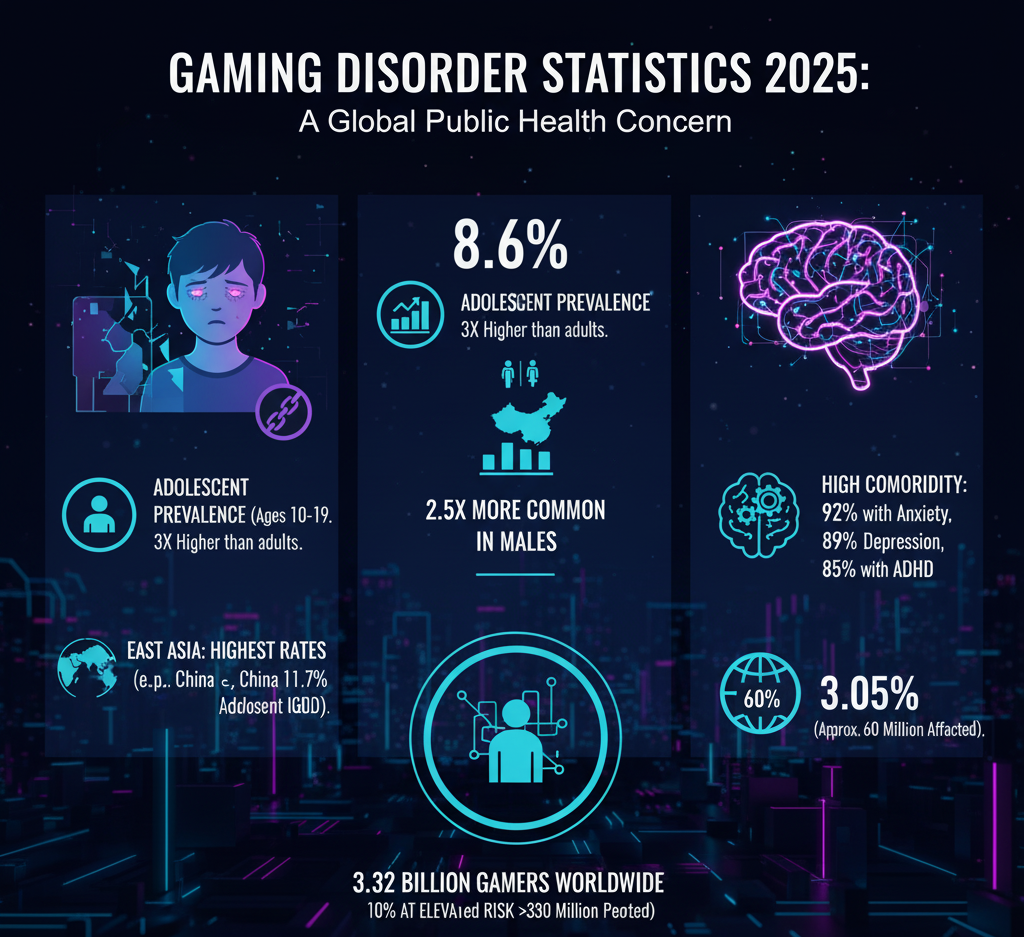
The scale of gaming addiction continues to grow as video game usage reaches unprecedented levels globally. With approximately 3.32 billion active gamers worldwide in 2025, understanding the prevalence and impact of gaming disorder has become a critical public health concern. Current meta-analytic research indicates that roughly 3.05 percent of gamers globally meet the clinical criteria for gaming disorder, translating to millions of individuals affected by problematic gaming behaviors.
Global Gaming Disorder Prevalence Rates in 2025
Gaming addiction statistics from comprehensive meta-analyses reveal varying prevalence rates depending on measurement criteria and study methodology. The pooled global prevalence estimate stands at 3.05 percent, with a 95 percent confidence interval ranging from 2.38 to 3.91 percent. However, when researchers apply stricter sampling quality filters, this figure adjusts downward to approximately 1.96 percent of the gaming population.
Recent empirical studies employing rigorous diagnostic criteria report a 12-month prevalence rate of internet gaming disorder at 0.8 percent in general population samples. Meanwhile, the one-month prevalence of problematic game use reaches 8.4 percent, capturing a broader spectrum of at-risk gaming behaviors. These variations reflect different measurement windows, population samples, and definitional frameworks rather than conflicting data.
Internet Gaming Disorder Statistics Among Adolescents and Youth
Adolescent populations demonstrate significantly elevated rates of gaming disorder compared to general population averages. A comprehensive meta-analysis examining 641,763 adolescent participants across multiple countries found a pooled gaming disorder prevalence of 8.6 percent, with confidence intervals spanning 6.9 to 10.8 percent. This rate substantially exceeds adult prevalence estimates, highlighting youth vulnerability to problematic gaming patterns.
Regional variations in adolescent gaming addiction statistics reveal considerable heterogeneity. Chinese adolescent samples show particularly high rates at 11.7 percent, while Spanish adolescent studies report 9.6 percent prevalence with notably wide confidence intervals. Singapore’s urban population demonstrates internet gaming disorder rates of 10.3 percent and gaming disorder rates of 5.0 percent among mixed-age samples. These geographic differences likely reflect varying cultural attitudes toward gaming, internet accessibility, and assessment methodologies.
Why Adolescents Face Higher Gaming Disorder Risk
Research consistently demonstrates that children, adolescents, and young adults experience gaming disorder at approximately three times the rate of older adults. Several developmental factors contribute to this vulnerability. Adolescence represents a critical period for identity formation and social connection, with games increasingly serving as primary social platforms. The prefrontal cortex, responsible for impulse control and decision-making, continues developing into the mid-twenties, potentially increasing susceptibility to addictive behaviors.
Additionally, younger players often have greater discretionary time for gaming and may lack fully developed coping mechanisms for stress management. The integration of gaming into youth social dynamics and online interactions creates environments where excessive gaming becomes normalized within peer groups.
Video Game Addiction Statistics by Gender and Demographics
Demographic analyses reveal significant disparities in gaming disorder prevalence across gender lines. Current research indicates that gaming disorder occurs approximately 2.5 times more frequently among males compared to females. This gender gap appears consistent across multiple studies and geographic regions, though the magnitude varies somewhat by age group and gaming platform preferences.
The male predominance in gaming addiction statistics may relate to several factors including historical gender differences in gaming participation rates, genre preferences, and socialization patterns. However, as female gaming participation continues to increase across all age groups, researchers observe gradual shifts in these demographic patterns. Mobile gaming platforms in particular show more balanced gender distributions, which may influence future prevalence patterns.
Age-Related Gaming Disorder Patterns
Beyond gender, age represents a critical demographic factor in video game addiction statistics. The highest risk period spans from late childhood through young adulthood, with prevalence rates declining substantially in middle and older adulthood. This age gradient reflects both developmental vulnerabilities and life circumstance changes as individuals assume adult responsibilities including career and family obligations.
Older adult gamers, while growing in absolute numbers as gaming platforms become more accessible, demonstrate considerably lower rates of problematic gaming behaviors. This suggests that gaming disorder risk may be particularly concentrated in developmental periods characterized by identity exploration and reduced competing responsibilities.
Problematic Gaming Behavior and Comorbidity Rates
Gaming disorder rarely occurs in isolation. Meta-analytic research published in 2024 reveals extraordinarily high comorbidity rates among individuals meeting gaming disorder criteria. Specifically, 92 percent of those with gaming disorder also meet criteria for anxiety disorders, 89 percent for depression, and 85 percent for attention-deficit hyperactivity disorder.
These elevated comorbidity percentages indicate that gaming disorder typically emerges within a broader context of mental health challenges. The directional relationship remains complex, as gaming may serve as both a maladaptive coping mechanism for pre-existing psychological distress and a contributing factor to mental health deterioration through social isolation, sleep disruption, and neglect of responsibilities.
| Comorbid Condition | Prevalence Among Gaming Disorder Cases | Clinical Implications |
|---|---|---|
| Anxiety Disorders | 92% | Requires integrated treatment approaches |
| Depression | 89% | Gaming may serve as avoidance mechanism |
| ADHD | 85% | Impulsivity increases addiction vulnerability |
Addictive Gaming Patterns in Heavy User Populations
Research examining specific heavy gaming populations reveals even higher prevalence rates. A University of Michigan study analyzing approximately 13,400 Steam platform users found that between 14.6 and 18.3 percent exhibited addictive consumption patterns. While these figures exceed general population estimates, they represent a self-selected sample of engaged, heavy-use gamers rather than representative population data.
These findings underscore an important distinction in gaming addiction statistics between general population prevalence and rates among high-engagement user subgroups. Individuals who invest substantial time in gaming communities and platforms naturally face greater exposure to potentially addictive gaming mechanics and social reinforcement of excessive play.
Gaming Addiction Trends and Population Growth Analysis
The global gaming population continues expanding at remarkable rates. Current estimates place the number of active video gamers at approximately 3.32 billion people worldwide, representing roughly 83 percent of the global population engaging in gaming activities at some level. This massive and growing player base means that even relatively modest prevalence rates translate to millions of individuals affected by gaming disorder.
Psychological profiling research suggests that approximately 10 percent of the gaming population may be at elevated risk for developing gaming disorder, even if they do not currently meet full diagnostic criteria. Applied to the current gamer base, this suggests a susceptible population exceeding 330 million individuals who may benefit from prevention or early intervention strategies.
Projected Impact and Public Health Considerations
If prevalence rates remain stable at 3 to 4 percent of active gamers, current estimates suggest approximately 60 million people worldwide may meet criteria for gaming disorder. This figure represents a substantial public health burden requiring coordinated responses from healthcare systems, educational institutions, and the gaming industry itself.
The continued expansion of gaming accessibility through mobile platforms, cloud gaming services, and increasingly sophisticated game design creates ongoing challenges for prevalence management. As games become more psychologically engaging and socially integrated, prevention efforts must evolve to address emerging risk factors while respecting legitimate recreational gaming.
Regional Gaming Disorder Case Studies and Geographic Variations
Geographic analyses of gaming addiction statistics reveal substantial regional variations that reflect cultural, technological, and socioeconomic factors. Singapore’s urban, high-connectivity environment shows particularly elevated rates, with internet gaming disorder prevalence reaching 10.3 percent and gaming disorder at 5.0 percent in recent studies. Gender stratification within Singapore shows male internet gaming disorder at 14.6 percent compared to female rates of 6.2 percent.
Asian Gaming Markets and Prevalence Patterns
East Asian gaming markets consistently demonstrate higher prevalence rates in gaming addiction statistics compared to Western regions. Chinese adolescent populations show gaming disorder rates of 11.7 percent, among the highest documented rates globally. These elevated figures may reflect several factors including intensive academic pressure creating escapism motives, widespread high-speed internet availability, cultural gaming acceptance, and extended daily screen time norms.
Conversely, some regional samples show lower rates. An Indian adolescent school-based study found gaming disorder prevalence of 2.27 percent, below many meta-analytic averages. Such variations underscore the importance of local context, sampling methodology, and cultural factors in determining prevalence patterns across different populations and geographic regions.
Understanding Different Gaming Addiction Measurement Approaches
The apparent inconsistency in reported gaming addiction statistics largely stems from varying measurement approaches rather than contradictory findings. Researchers employ different diagnostic instruments, population sampling methods, and definitional criteria when assessing gaming disorder prevalence. Understanding these methodological differences helps contextualize reported rates.
Diagnostic Criteria and Assessment Tools
The World Health Organization’s ICD-11 classification system includes gaming disorder as a recognized condition, while the American Psychiatric Association’s DSM-5 lists internet gaming disorder as a condition requiring further research. Different studies may apply either framework or use specialized assessment instruments designed for specific populations. Stricter diagnostic thresholds naturally yield lower prevalence estimates than broader screening criteria.
Measurement timeframes also substantially impact reported rates. One-month prevalence captures current problematic gaming behaviors and typically shows higher rates than 12-month prevalence, which requires sustained patterns over longer periods. Lifetime prevalence rates, examining whether individuals have ever met criteria, generate still different figures. These temporal variations do not represent conflicting data but rather different snapshots of the same phenomenon.
Gaming Disorder Risk Factors and Vulnerability Markers
Certain individual and environmental characteristics predict elevated gaming disorder risk. Demographic risk factors include being male, being younger, and having lower socioeconomic status. Psychological vulnerabilities include pre-existing mental health conditions, particularly ADHD, depression, and anxiety disorders. Individuals with poor emotion regulation skills, social anxiety, or limited offline social support networks face heightened susceptibility.
Game Design Features That Increase Addiction Potential
Specific game design elements correlate with higher problematic gaming rates. Games featuring endless progression systems, social obligation mechanics, randomized reward structures, and competitive ranking systems create psychological hooks that may facilitate addictive engagement patterns. Multiplayer online battle arena games and massively multiplayer online role-playing games consistently show higher association with gaming disorder compared to single-player, narrative-focused games.
The integration of microtransactions and loot box mechanics introduces additional addiction-like features that exploit the same psychological mechanisms as gambling. These monetization strategies may compound gaming disorder risk, particularly among individuals with comorbid gambling tendencies or poor impulse control. Understanding how different gaming platforms and design philosophies influence addiction potential remains an active area of research.
Treatment Access and Recovery Statistics for Gaming Addiction
Despite the substantial prevalence of gaming disorder, treatment access remains limited in many regions. Specialized gaming addiction treatment programs exist primarily in countries with high gaming disorder recognition, including South Korea, China, and Japan. Western countries increasingly develop treatment protocols, often adapting approaches from substance abuse and behavioral addiction frameworks.
Evidence-Based Interventions for Gaming Disorder
Cognitive-behavioral therapy represents the most extensively studied intervention for gaming disorder, showing moderate to strong efficacy in reducing gaming time and improving functional outcomes. Family-based interventions demonstrate particular promise for adolescent populations, addressing both the gaming behavior and underlying family dynamics that may contribute to excessive gaming.
Recovery statistics remain limited but emerging research suggests that many individuals with gaming disorder experience some natural recovery as life circumstances change, particularly when transitioning to adulthood with increased responsibilities. However, formal treatment significantly improves recovery rates and reduces the duration of problematic gaming patterns. Long-term follow-up studies indicate that relapse rates mirror those seen in other behavioral addictions, highlighting the need for sustained intervention and monitoring.
Prevention Strategies and Public Health Approaches to Gaming Disorder
Effective prevention of gaming disorder requires multi-level interventions targeting individual, family, school, and societal factors. Education programs teaching media literacy and healthy gaming habits show promise when implemented during late childhood and early adolescence, before problematic patterns typically emerge. Parental monitoring and limit-setting correlate with reduced gaming disorder risk, though implementation challenges exist as children age and gain autonomy.
Industry Responsibility and Regulatory Approaches
Gaming industry practices substantially influence population-level prevalence rates. Some jurisdictions implement regulatory frameworks limiting daily gaming time for minors, requiring real-name registration, or restricting late-night gaming access. South Korea’s Shutdown Law and China’s gaming time restrictions for minors represent notable regulatory interventions, though their long-term effectiveness on gaming disorder rates remains under evaluation.
Voluntary industry measures include implementing playtime tracking tools, providing break reminders, and designing games with natural stopping points rather than endless engagement mechanics. Some developers explore incorporating wellness features that encourage balanced gaming habits, though economic incentives often conflict with such approaches. Balancing legitimate entertainment value with addiction prevention represents an ongoing challenge requiring cooperation between industry stakeholders, researchers, and policymakers.
Future Projections for Gaming Addiction Statistics
As gaming technology evolves and accessibility increases, gaming addiction statistics will likely continue shifting. The proliferation of mobile gaming expands the at-risk population to include demographics previously less exposed to intensive gaming. Cloud gaming services eliminate hardware barriers, potentially increasing overall gaming participation and consequently the absolute number of individuals developing gaming disorder.
Emerging Technologies and New Risk Vectors
Virtual reality and augmented reality gaming platforms introduce novel addiction vectors through heightened immersion and embodied presence. The integration of artificial intelligence in game design enables increasingly personalized engagement strategies that may prove more psychologically compelling than traditional approaches. Social virtual worlds and metaverse environments blur boundaries between gaming, socializing, and daily life activities, potentially complicating diagnostic distinctions and intervention strategies.
Conversely, advancing research and clinical understanding may improve early identification and intervention, potentially moderating prevalence increases despite growing gaming populations. The development of evidence-based prevention programs and increased clinical recognition of gaming disorder as a legitimate health concern creates infrastructure for more effective population-level management.
FAQs
What percentage of gamers are addicted to video games?
▼Approximately 3.05 percent of gamers globally meet clinical criteria for gaming disorder according to meta-analytic research. When applying stricter sampling quality standards, this estimate adjusts to around 1.96 percent. However, prevalence rates vary considerably based on population demographics, with adolescent rates reaching 8.6 percent and certain high-engagement gaming communities showing rates between 14.6 and 18.3 percent.
How common is internet gaming disorder in adolescents?
▼Internet gaming disorder affects approximately 8.6 percent of adolescents globally according to large-scale meta-analyses. This rate substantially exceeds adult prevalence estimates, with adolescents experiencing gaming disorder at roughly three times the rate of older adults. Regional variations exist, with Chinese adolescent samples showing 11.7 percent prevalence and Singapore reporting 10.3 percent for internet gaming disorder specifically.
Are males or females more likely to develop gaming disorder?
▼Gaming disorder occurs approximately 2.5 times more frequently among males compared to females across multiple studies and geographic regions. Singapore data illustrates this gender disparity, with male internet gaming disorder rates at 14.6 percent versus female rates of 6.2 percent. However, as female gaming participation continues increasing, particularly on mobile platforms, this gender gap may narrow over time.
What mental health conditions commonly co-occur with gaming addiction?
▼Gaming disorder demonstrates extremely high comorbidity rates with other mental health conditions. Research indicates that 92 percent of individuals with gaming disorder also meet criteria for anxiety disorders, 89 percent for depression, and 85 percent for ADHD. These elevated comorbidity rates suggest that gaming disorder typically occurs within a broader mental health context rather than as an isolated condition.
How many people worldwide are affected by gaming disorder?
▼With approximately 3.32 billion active gamers worldwide and prevalence rates between 2 and 4 percent, current estimates suggest that 60 million to 130 million people globally may meet criteria for gaming disorder. Additionally, approximately 10 percent of gamers, representing over 300 million individuals, may be at elevated risk for developing gaming disorder even if they do not currently meet full diagnostic criteria.
Why are adolescents more vulnerable to video game addiction?
▼Adolescents face elevated gaming disorder risk due to developmental factors including ongoing prefrontal cortex maturation affecting impulse control, identity formation processes that make social gaming particularly compelling, greater discretionary time for gaming activities, and less developed coping mechanisms for stress management. The integration of gaming into adolescent social structures also normalizes excessive gaming within peer groups, further increasing vulnerability.
What is the difference between problematic gaming and gaming disorder?
▼Problematic gaming represents a broader category of at-risk gaming behaviors that may not meet full diagnostic criteria for gaming disorder. Research shows one-month problematic gaming prevalence at 8.4 percent compared to 12-month gaming disorder prevalence of 0.8 percent. Problematic gaming includes individuals showing some concerning patterns such as excessive time investment or interference with responsibilities, while gaming disorder requires meeting specific diagnostic criteria including loss of control, prioritization over other activities, and continuation despite negative consequences.
Which countries have the highest gaming addiction rates?
▼East Asian countries consistently report higher gaming disorder prevalence rates. China shows adolescent rates of 11.7 percent, while Singapore demonstrates overall internet gaming disorder prevalence of 10.3 percent. These elevated rates likely reflect multiple factors including widespread high-speed internet access, cultural acceptance of intensive gaming, academic pressure creating escapism motives, and longer average screen time durations. However, methodological differences across studies make direct cross-national comparisons challenging.
How effective are treatments for gaming disorder?
▼Cognitive-behavioral therapy demonstrates moderate to strong efficacy in treating gaming disorder, with evidence showing significant reductions in gaming time and improved functional outcomes. Family-based interventions show particular promise for adolescent populations. While long-term recovery statistics remain limited, emerging research suggests that many individuals experience natural recovery with life stage transitions, though formal treatment significantly improves recovery rates and reduces the duration of problematic gaming patterns. Relapse rates appear similar to those observed in other behavioral addictions.
Are certain types of games more addictive than others?
▼Yes, specific game genres and design features correlate with higher gaming disorder rates. Multiplayer online battle arena games and massively multiplayer online role-playing games show stronger associations with problematic gaming compared to single-player narrative games. Games featuring endless progression systems, social obligation mechanics, competitive ranking systems, and randomized reward structures create psychological engagement patterns that may facilitate addictive behaviors. The integration of microtransactions and loot box mechanics introduces additional risk factors by exploiting similar psychological mechanisms as gambling.
References and Sources
- Stevens MW, Dorstyn D, Delfabbro PH, King DL. Global prevalence of gaming disorder: A systematic review and meta-analysis. Australian & New Zealand Journal of Psychiatry. 2021. https://pubmed.ncbi.nlm.nih.gov/32198106/
- Dullur P, Hay P. Problem gaming and the five-factor personality model: A systematic review. Journal of Behavioral Addictions. 2024. https://www.frontiersin.org/articles/10.3389/fpsyt.2022.942835/full
- Wichstrøm L, Stenseng F, Belsky J, von Soest T, Hygen BW. Symptoms of Internet Gaming Disorder in Youth: Predictors and Comorbidity. Journal of the American Academy of Child & Adolescent Psychiatry. 2024. https://www.ncbi.nlm.nih.gov/pmc/articles/PMC6794021/
- Paulus FW, Ohmann S, von Gontard A, Popow C. Internet gaming disorder in children and adolescents: a systematic review. Developmental Medicine & Child Neurology. 2024. https://link.springer.com/article/10.1007/s11469-023-01068-9
- Stevens M, King DL, Dorstyn D, Delfabbro PH. Cognitive-behavioral therapy for Internet gaming disorder: A systematic review and meta-analysis. Clinical Psychology & Psychotherapy. 2024. https://jamanetwork.com/journals/jamanetworkopen/fullarticle/2816343