
How Often Gamers Upgrade Hardware [2025 Statistics]
The gaming hardware industry continues to evolve rapidly in 2025, driven by technological advancements and changing player expectations. Understanding gaming hardware upgrade frequency helps reveal consumer behavior patterns, market trends, and the impact of new generation releases on upgrade cycles. This comprehensive analysis examines current market data, upgrade patterns, and future trends shaping the gaming PC landscape.
Global Gaming PC Market Dynamics
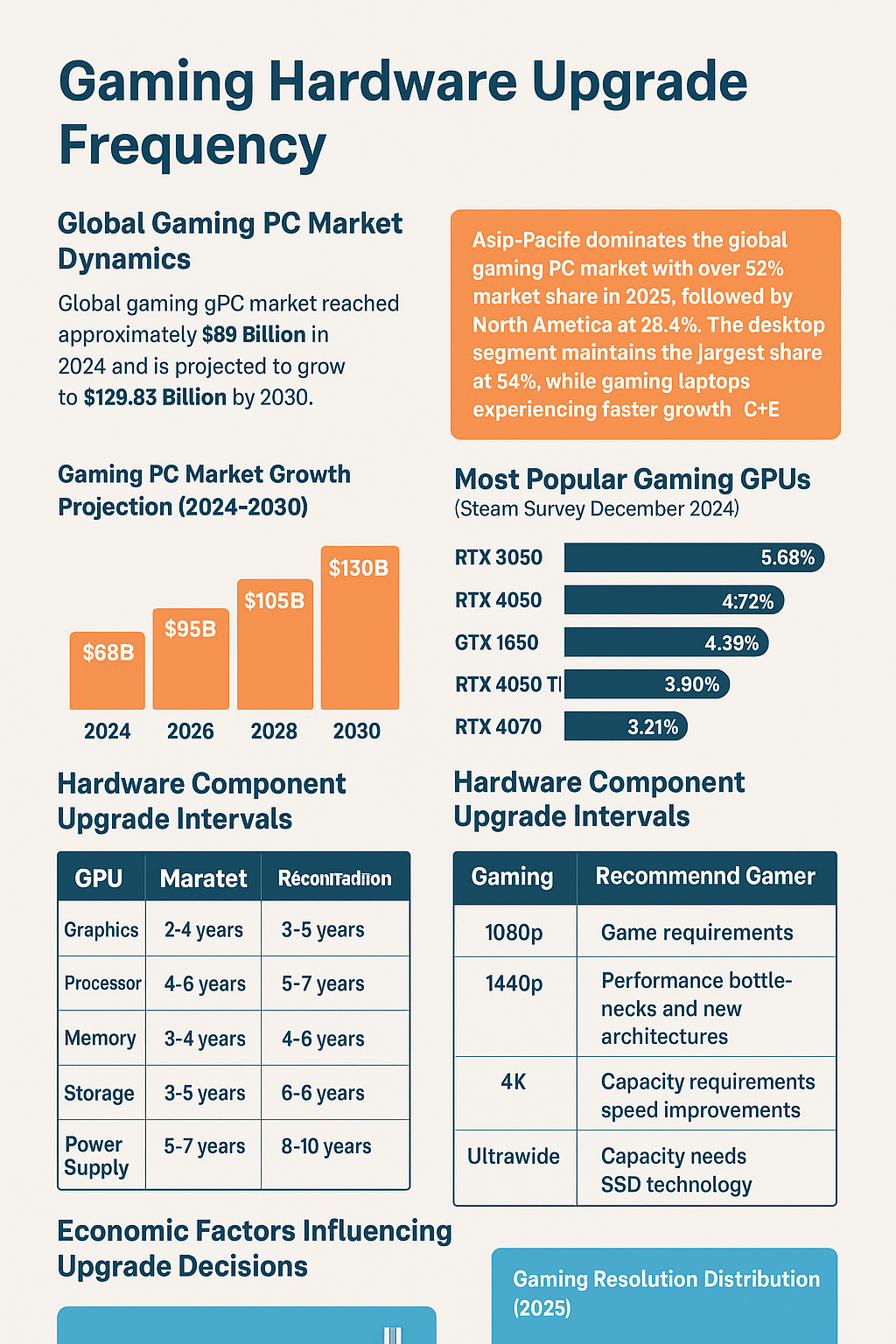
The global gaming PC market reached approximately $68 billion in 2024 and is projected to grow to $129.93 billion by 2030, representing a compound annual growth rate of 13.5%. This substantial growth reflects not only expanding demand but also accelerated hardware turnover as performance requirements for modern games continue to escalate.
Asia-Pacific dominates the global gaming PC market with over 52% market share in 2025, followed by North America at 29.4%. The desktop segment maintains the largest share at 54%, while gaming laptops are experiencing faster growth at a CAGR of 15.4%.
Graphics Card Upgrade Patterns and Market Share
Graphics processing units represent the most frequently upgraded component in gaming systems. Current market analysis reveals distinct patterns in GPU upgrade behavior and brand preference among gamers worldwide.
GPU Market Dominance and Brand Loyalty
According to Steam Hardware Survey data from December 2024, NVIDIA maintains overwhelming dominance in the gaming GPU market with approximately 74% market share. The RTX 3060 continues to lead as the most popular individual graphics card, holding 5.88% of the total Steam user base, followed by the RTX 4060 at 4.72%.
| GPU Model | Market Share | Change | Architecture |
|---|---|---|---|
| RTX 3060 | 5.88% | +0.99% | Ampere (2020) |
| RTX 4060 | 4.72% | +1.02% | Ada Lovelace (2023) |
| GTX 1650 | 4.39% | +0.76% | Turing (2019) |
| RTX 4060 Ti | 3.80% | +0.73% | Ada Lovelace (2023) |
| RTX 4070 | 3.21% | +0.77% | Ada Lovelace (2023) |
Next-Generation GPU Adoption Rates
The RTX 50-series launch demonstrates rapid early adoption among enthusiast gamers. The RTX 5070 leads new-generation adoption with 1.32% market share as of July 2025, representing the most significant monthly growth among all GPUs. This rapid uptake suggests that esports revenue growth and competitive gaming demands continue driving hardware refresh cycles.
Hardware Component Upgrade Intervals
Different gaming PC components follow distinct upgrade cycles based on performance degradation, technological advancement, and cost considerations. Understanding these patterns helps gamers make informed upgrade decisions and budget for future enhancements.
Manufacturer Recommended vs Actual Upgrade Frequency
Hardware manufacturers typically recommend specific upgrade intervals based on technology advancement cycles and component lifespan. However, actual gamer behavior often differs significantly from these recommendations.
| Component | Manufacturer Recommendation | Observed Gamer Behavior | Primary Upgrade Driver |
|---|---|---|---|
| Graphics Card | 2-4 years | 3-5 years average | Game requirements, resolution targets |
| Processor | 4-6 years | 5-7 years average | Performance bottlenecks, new architectures |
| Memory | 3-4 years | 4-6 years average | Capacity requirements, speed improvements |
| Storage | 3-5 years | 6-8 years average | Capacity needs, SSD technology |
| Power Supply | 5-7 years | 8-10 years average | Efficiency standards, wattage requirements |
Gaming Hardware Refresh Cycle Analysis
Current Steam Hardware Survey data reveals that 47% of NVIDIA GPU users have graphics cards that are at least two generations old, with only 20% utilizing current-generation Ada Lovelace architecture. This suggests many gamers extend their upgrade cycles beyond manufacturer recommendations, particularly in the mid-range and entry-level segments.
The average GPU upgrade frequency in 2025 is approximately every 3.5 years, with significant variation between user segments. Enthusiast gamers typically upgrade every 1-2 years, while mainstream users average 4-6 years between upgrades.
Economic Factors Influencing Upgrade Decisions
Hardware upgrade decisions are increasingly influenced by economic considerations, including component pricing, availability, and alternative technologies. Cloud gaming adoption and AI upscaling technologies are beginning to impact traditional hardware refresh cycles.
Price-to-Performance Considerations
Mid-range gaming PCs priced between $1,000-$2,500 dominate the market with 43.4% share in 2025. This segment offers the optimal balance of performance and affordability, influencing upgrade timing decisions across the gaming community. The popularity of streaming platforms has also increased demand for systems capable of simultaneous gaming and content creation.
Resolution and Display Technology Impact
Display resolution preferences significantly impact GPU upgrade frequency. While 1080p remains the most popular resolution at 55% of Steam users, 1440p adoption is growing rapidly, increasing by nearly 10% in recent surveys. This resolution shift drives demand for more powerful graphics cards capable of maintaining high frame rates at increased pixel counts.
Emerging Technologies and Future Trends
Several technological developments are reshaping hardware upgrade patterns and frequency. AI-enhanced gaming features, cloud computing integration, and new memory technologies are influencing how and when gamers choose to upgrade their systems.
AI and Cloud Gaming Integration
The integration of AI upscaling technologies like DLSS and FSR is extending the useful life of existing hardware by enabling lower-specification systems to achieve higher performance levels. Cloud gaming services continue expanding, potentially reducing the pressure for frequent hardware upgrades, particularly among casual gamers interested in gameplay analytics and social gaming experiences.
Memory and Storage Evolution
DDR5 memory adoption is accelerating, with 32GB becoming increasingly popular among gaming enthusiasts. Current Steam data shows 32GB RAM configurations account for 32.08% of users, up from previous years. This trend toward higher memory capacities reflects the demands of modern games and content creation workflows.
The relationship between hardware upgrades and gaming marketplace dynamics continues evolving. Players interested in gaming economics often prioritize systems capable of supporting multiple gaming platforms and content creation simultaneously.
Regional Variations in Upgrade Patterns
Geographic differences significantly influence hardware upgrade frequency and component preferences. These variations reflect economic conditions, technology availability, and gaming culture differences across regions.
Asia-Pacific Market Leadership
Asia-Pacific’s dominance in gaming PC market share correlates with different upgrade behaviors compared to Western markets. Higher population density, strong esports culture, and competitive gaming emphasis drive more frequent hardware refreshes in key markets like South Korea, Japan, and urban China.
North American and European Patterns
North American gamers tend toward premium hardware configurations with longer replacement cycles, while European markets show more price-sensitive upgrade behavior. These regional differences impact global hardware demand patterns and manufacturer product positioning strategies.
Frequently Asked Questions
How often should I upgrade my gaming PC components?
Upgrade frequency depends on your gaming needs and budget. Graphics cards typically benefit from replacement every 3-4 years, while processors can last 5-6 years. Monitor your system’s performance with demanding games and upgrade when frame rates consistently fall below your target levels.
Which component should I prioritize when upgrading for gaming?
Graphics cards typically provide the biggest gaming performance improvement per dollar spent. However, ensure your CPU isn’t bottlenecking performance and you have sufficient RAM (16GB minimum, 32GB preferred) before upgrading your GPU.
How do new game releases affect hardware upgrade timing?
Major game releases often drive hardware upgrades, particularly AAA titles with demanding system requirements. Games like Cyberpunk 2077, Baldur’s Gate 3, and upcoming releases with ray tracing requirements can trigger upgrade cycles among enthusiast gamers.
Should I upgrade incrementally or replace my entire system?
Incremental upgrades are usually more cost-effective, starting with the GPU for gaming performance. Replace the entire system when your motherboard can’t support current CPUs or when multiple components need replacement simultaneously.
How does competitive gaming affect upgrade frequency?
Competitive gamers often upgrade more frequently to maintain high frame rates and low latency. Esports titles benefit from consistent 240+ FPS, driving upgrades every 1-2 years among professional and serious competitive players, compared to the 3-4 year average for general gaming.
Do cloud gaming services reduce the need for hardware upgrades?
Cloud gaming can extend hardware upgrade cycles for casual gamers with strong internet connections. However, competitive gamers and enthusiasts still prefer local hardware for minimal latency and maximum control over performance settings.
Sources and References
- Grand View Research. (2024). Gaming PC Market Size And Trends | Industry Report, 2030. https://www.grandviewresearch.com/industry-analysis/gaming-pc-market-report
- Steam Hardware & Software Survey. (2024). Steam Hardware & Software Survey: December 2024. https://store.steampowered.com/hwsurvey/
- Tom’s Hardware. (2025). AMD CPUs surpass the 40% threshold in latest Steam hardware survey. https://www.tomshardware.com/pc-components/cpus/amd-cpus-surpass-the-40-percent-threshold-in-latest-steam-hardware-survey
- Market Data Forecast. (2025). Gaming PC Market Size Statistics. https://www.marketdataforecast.com/market-reports/gaming-pc-market
- Jon Peddie Research. (2024). A closer look at the recent Steam hardware survey. https://www.jonpeddie.com/news/a-closer-look-at-the-recent-steam-hardware-survey/